
Climate adaptation and the changing risks for commercial buildings
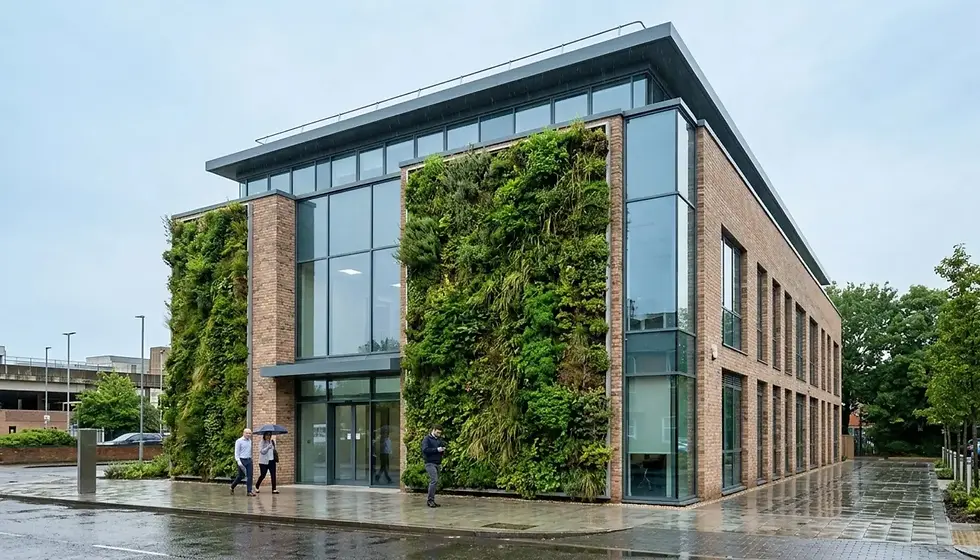
A roof that holds rainwater can ease pressure on drains. A wall covered in plants can help cool the space around it. Both show how buildings can adapt to a changing climate.
These features also become part of the property being insured. A new roof system changes how water moves, while a planted wall adds materials to the outside of a building. For commercial insurance brokers, this connects environmental progress with familiar concerns: fire, water damage, injury and disruption to trade.
For us at RiskSTOP, the important point is how these changes affect the whole property. That means looking at the project's goal, the work itself and how the new feature will be cared for over time.
Green walls: what sits behind the plants
Green walls can take several forms. Some use climbing plants rooted in the ground. Others use containers and support frames fixed to the wall.
Government research published in 2013 examined a small range of green wall and roof systems, including the materials behind the plants. It found that some backing materials and containers could add fuel to a fire. Those findings do not establish how every system used today would perform. The plants themselves need care too. Dry or dead growth may add to the fire risk.
Plants, water and the material used to grow them also add weight. Some walls rely on a watering system to keep the planting healthy.
For property risk, maintenance has a wider purpose than keeping the wall looking good. It helps the planting, and the system behind it continue to work as intended. This includes keeping the watering system in working order and removing dead growth. The wall is now part of a building used by staff, tenants or customers. If it needs repair, access to the building may be disrupted.
Blue roofs: keeping water under control
Blue roofs hold rainwater at roof level and let it drain away slowly. This can reduce the flow into drains during heavy rain. Some sit beneath a planted green roof.
The water adds weight, which forms part of the roof's design. An existing roof must also be able to carry the extra load. The roof also needs to keep water out of the building while allowing it to leave by the intended route. NFRC technical guidance covers these points, including outlets, emergency overflows and access for upkeep.
The risk becomes easier to understand when we look below the roof. If an outlet blocks, water may be held for longer than planned. Emergency overflows give excess water another route out. If waterproofing fails, it may reach stock, equipment or work areas below. Finding a leak can be harder when the waterproofing is hidden beneath the roof system. Repairs could affect trading as well as the roof itself.
A blue roof's drainage and maintenance are central to the job it is there to do. Their importance continues long after the building work has finished.
Building work brings its own risks
Retrofitting brings new features into an existing building. People may be working, shopping or visiting while the work takes place.
HSE guidance on protecting the public explains risks such as falling materials, excavations and moving vehicles. Its guidance for commercial clients covers the roles of the client, designers and contractors.
A project can therefore improve a building's long-term protection while changing the risks people face during the work. The construction period is part of the insurance picture in its own right.
Retrofit work may also affect existing fire protection, security and weatherproofing for a time, especially if the building stays open during the project.
Flood protection reaches beyond the property
Flood defences can reduce the chance of water reaching a site. Risk remains if a defence fails or a flood exceeds the level it was designed to withstand. England's planning guidance also considers how flood management affects risk elsewhere.
An improvement at one site sits within a network of neighbouring land, drains and watercourses. If a flood barrier or drainage change is poorly designed, it may alter where water flows. This could affect nearby property and lead to a dispute.
Rain gardens and shallow planted channels can slow or hold rainwater too. They may look like landscaping, but they have a job to do. England's non-statutory standards for sustainable drainage cover maintenance, access and who looks after a system. These standards focus on new developments, though they can also inform retrofits where the site allows.
The common thread is care after completion. A feature designed to manage water remains part of the way the site works throughout its life.
Seeing the whole risk
The consequences of a problem may reach beyond the new feature. A leak can damage contents and interrupt a business. An incident during construction could injure a visitor. A drainage dispute could involve neighbours as well as the property owner.
A problem may stem from the design, the work carried out or later upkeep. Who is legally liable, and what a policy covers, depends on the facts, contracts and policy wording.
David Reynolds, Head of Surveys at RiskSTOP, said, “Climate adaptation measures can deliver real benefits, but they must be considered as part of the building's overall risk profile. Whether installing green walls, blue roofs or flood defences, good design, appropriate installation and ongoing inspection and maintenance are essential. Without these controls, measures intended to improve resilience can inadvertently introduce new risks.”
For brokers, this gives context to changes at a client's property. Technical judgements sit with the specialists involved. The insurance picture includes the aim of the work, its effect on the building and the possible consequences for people and trade.
Climate adaptation can help buildings cope with the conditions ahead. Its lasting value depends on new features working well for the whole property and the people who rely on it.


Comments